Mehendi Ceremony Guide: Meaning, Traditions, Regional Variations, and Benefits
A detailed guide to the Mehendi ceremony, its meaning, origins, regional customs, and modern relevance in Indian weddings.
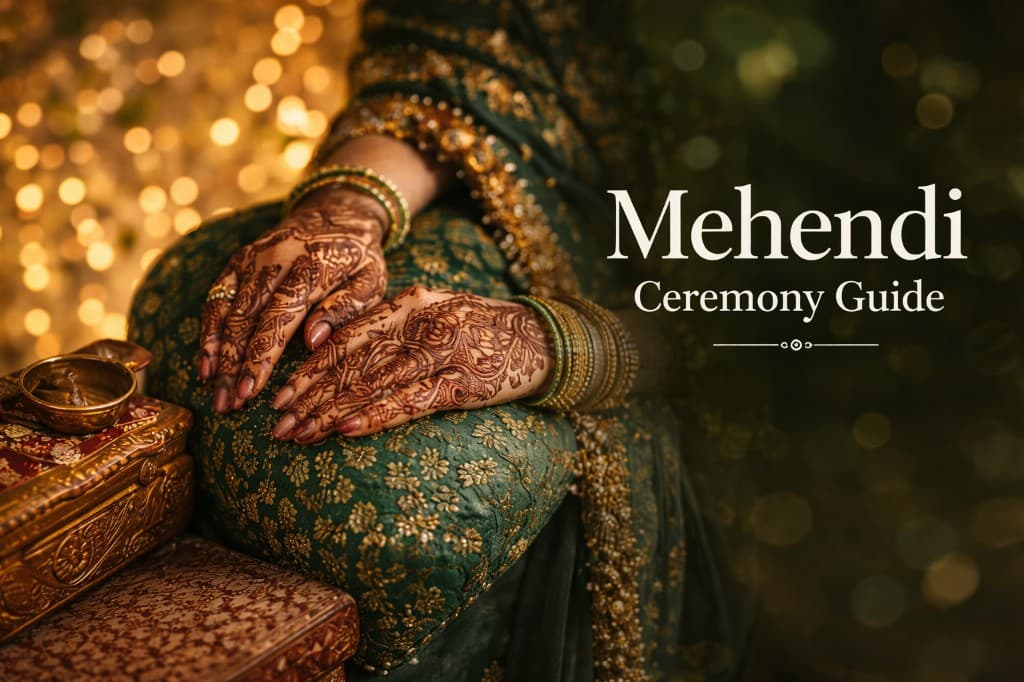
The Mehendi ceremony is one of the most joyful and visually memorable events in many Indian weddings. It is often filled with music, laughter, intricate henna designs, bright outfits, and close family gatherings. But Mehendi is not only about decoration; in many traditions it carries symbolism, family meaning, and auspicious pre-wedding preparation.
On this page
- What is the Mehendi ceremony?
- Why is Mehendi important?
- Religious and cultural origins
- What usually happens
- Regional variations across India
- Practical and social benefits
- Scientific benefit discussion
- Modern Mehendi celebrations
- Planning tips
- What guests should know before attending
- How to mention in invitation
- Final thoughts
What is the Mehendi ceremony?
The Mehendi ceremony is a pre-wedding celebration in which henna paste is applied in decorative patterns, usually on the bride’s hands and feet, and often on family members and guests too. In some weddings, the groom may also have a smaller Mehendi ritual.
Why is the Mehendi ceremony important?
- Adds happiness and celebration before the wedding.
- Represents an auspicious step in the wedding journey.
- Builds bonding among family and friends.
- Supports personal preparation for the bride.
- Preserves cultural continuity through design, songs, and gathering.
Religiously and culturally, why did Mehendi begin?
Mehendi is best understood as a long-standing cultural and traditional practice rather than a ritual with one universal religious source. Over generations, henna became associated with weddings because of its beauty, festive symbolism, and visible role in bridal adornment and family celebration.
What usually happens in a Mehendi ceremony?
- Henna is applied to the bride’s hands and feet.
- Sisters, cousins, friends, and guests may also get simple designs.
- Music, songs, dance, and social interaction continue through the event.
- Decor, snacks, and family photos are typically included.
- In modern events, themed styling and coordinated decor are common.
Regional variations across India
North India
- Often a major pre-wedding function with music, decor, dance, and active participation.
- Bridal Mehendi designs can be elaborate and event-centric.
South India
- May or may not have the same central status as some North Indian weddings.
- In some families it is a smaller part of bridal preparation; in others modern trends make it more visible.
West India
- Gujarati, Marathi, and Rajasthani contexts may include regional styling, attire, songs, and family customs.
- Some communities celebrate with high festive energy; others keep it intimate.
East India
- Observed differently by community and family custom.
- Some traditions place stronger emphasis on other symbolic preparations while Mehendi remains lighter or contemporary.
Practical and social benefits
- Creates a relaxed and joyful atmosphere before the main ceremony.
- Gives the bride a personal pre-wedding pause.
- Brings close family and friends together in a less formal setting.
- Preserves songs, design traditions, and shared rituals.
- Creates emotionally rich and memorable moments.
Are there scientific benefits to Mehendi?
This should be handled carefully. Henna is traditionally associated with a cooling sensation and many people find the process soothing. However, effects vary by skin type and ingredients. Mehendi as a wedding ritual should not be presented as a universally proven medical treatment.
Responsible way to explain this
- ✓Acknowledge traditional cooling/soothing association.
- ✓Mention emotional calming through ritual context.
- ✓Avoid strong medical certainty unless clearly supported.
- ✓Use skin-safe henna and avoid harmful additives.
How modern families celebrate Mehendi today
- Floral or colorful decor themes.
- Coordinated dress codes.
- Live music or curated playlists.
- Dance performances.
- Bride and guest henna zones.
- Personalized backdrops and separate invites.
- Mini celebration format with festive energy.
Tips for planning a Mehendi function
- ✓Keep enough time for bridal Mehendi application.
- ✓Use trusted artists and skin-safe materials.
- ✓Plan seating, lighting, and airflow comfortably.
- ✓Avoid overloading the bride’s schedule before wedding day.
- ✓Clarify whether guests can also get Mehendi.
- ✓Mention intimate vs open attendance clearly.
- ✓Keep food and music flow simple and smooth.
What guests should know before attending
Mehendi usually has a relaxed social flow, but the bride's design timeline often drives the event pace.
Quick guest notes
- Expect longer seated phases while bridal mehendi is applied.
- Hosts should share whether guest mehendi is available and in what time slot.
- Theme or color notes help guests arrive prepared.
- Music and conversation are common, but keep aisle/seating movement easy for elders.
- First-time attendees appreciate a simple sequence note on the invite page.
Clear expectation-setting makes Mehendi feel smooth instead of delayed or chaotic.
How to mention Mehendi in an invitation
- Ceremony name
- Date and time
- Venue
- Host/couple details
- RSVP
- Optional dress theme
Join us for a joyful Mehendi ceremony filled with music, color, laughter, and the celebration of our wedding festivities.
Final thoughts
The Mehendi ceremony beautifully combines celebration, art, family warmth, and wedding preparation. For some families, it is deeply cherished tradition; for others, a modern joyful pre-wedding event. In both forms, it remains meaningful because it brings people together with beauty and shared happiness.
Helpful links
FAQs – Mehendi Ceremony Guide: Meaning, Traditions, Regional Variations, and Benefits
Is the Mehendi ceremony compulsory in every Indian wedding?
No. Mehendi is common in many Indian weddings, but not every family includes it.
Is Mehendi more cultural or religious?
In many weddings, Mehendi is primarily cultural and celebratory, while some families also connect it with auspicious traditional preparation.
Can guests also apply Mehendi during the function?
Yes. In many weddings, sisters, cousins, friends, and guests also get simple Mehendi designs.
Does Mehendi have proven scientific benefits?
Mehendi has traditional associations with cooling and soothing, but it should not be described as a universally proven medical treatment.
Read next
Continue your learning journey with these related guides.
Wedding
Indian Wedding Ceremony Guide: Rituals, Meaning, Regional Variations, and Modern Relevance
A practical guide to Indian wedding rituals, regional traditions, family variations, and modern wedding planning.
4 min read
Wedding
Haldi Ceremony Guide: Meaning, Rituals, Regional Variations, and Benefits
A detailed guide to the Haldi ceremony, its meaning, origins, regional customs, and modern relevance in Indian weddings.
3 min read
Wedding
Sangeet Ceremony Guide: Meaning, Traditions, Regional Variations, and Benefits
A detailed guide to the Sangeet ceremony, its meaning, origins, regional customs, and modern relevance in Indian weddings.
3 min read
Wedding
Roka Ceremony Guide: Meaning, Traditions, Family Significance, and Benefits
A detailed guide to the Roka ceremony, its meaning, family importance, regional customs, and modern relevance in Indian weddings.
4 min read
Wedding
7 Pheras Meaning Guide: Significance, Symbolism, and Modern Relevance
A detailed guide to the meaning of the 7 Pheras, their symbolism in Hindu weddings, family variations, and modern significance.
4 min read

Invitation wording
Mehendi Invitation Wording Ideas
Elegant formal lines, friendly casual text, and quick WhatsApp formats for Mehendi invitations.
1 min read
On this page
- What is the Mehendi ceremony?
- Why is Mehendi important?
- Religious and cultural origins
- What usually happens
- Regional variations across India
- Practical and social benefits
- Scientific benefit discussion
- Modern Mehendi celebrations
- Planning tips
- What guests should know before attending
- How to mention in invitation
- Final thoughts