Why Is Shagun Given in Odd Amounts? Meaning of 101, 501, 1100 and More
A practical and culturally aware guide to why shagun is often given in odd amounts like 101, 501, and 1100, and what these amounts commonly suggest in Indian family functions.
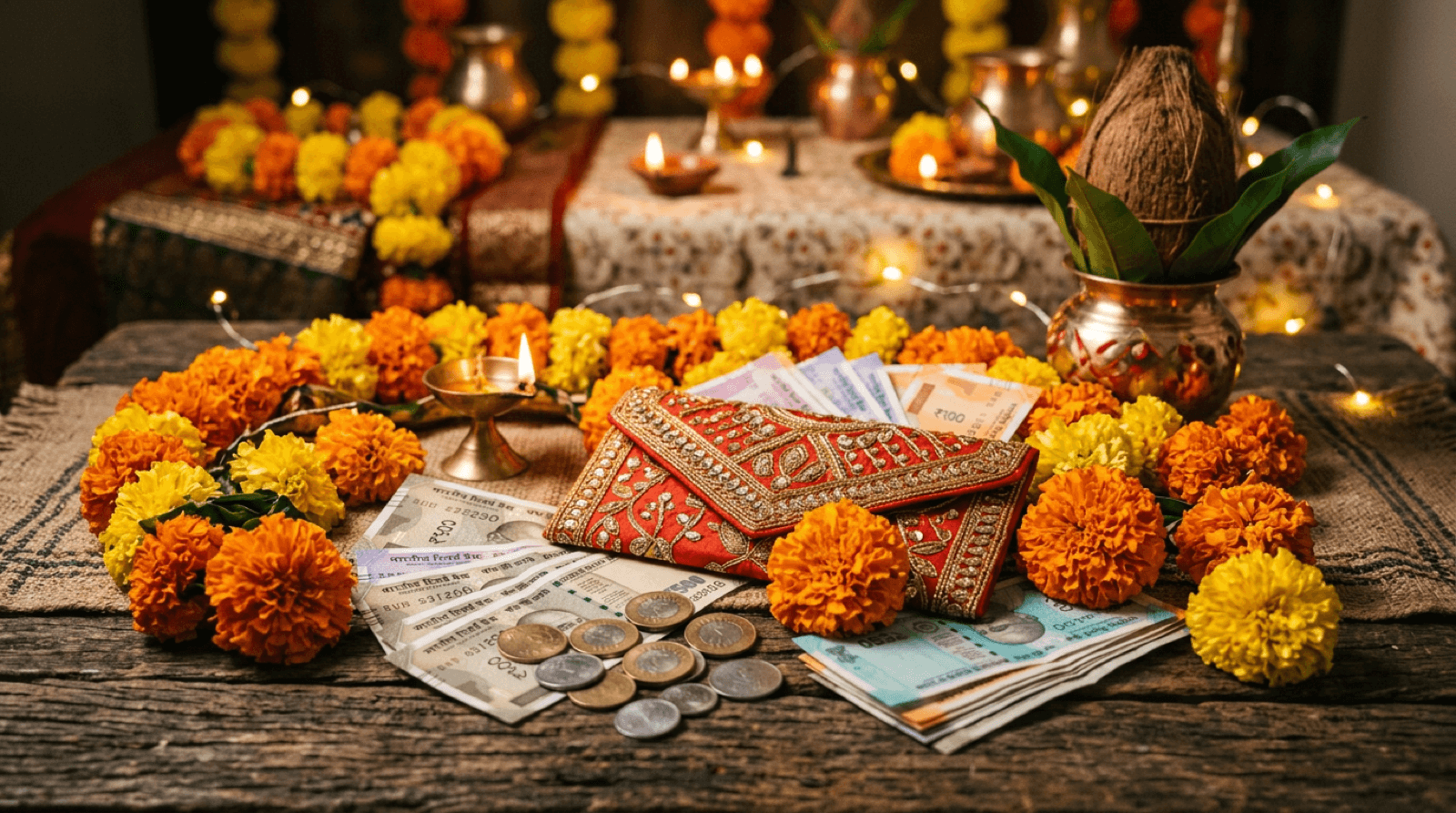
In many Indian families, shagun is often given in amounts like 101, 251, 501, 1100, or 2100 instead of round numbers like 100, 500, or 1000. Many people follow this tradition without always being sure why it is done. Is it spiritual? Is it just family custom? Does every amount carry a fixed meaning? And does the same rule apply in every home? This guide explains why odd amounts are commonly used in shagun, what they usually symbolize, how families think about them in practice, and why traditions around shagun can vary.
On this page
Quick answer
Many Indian families prefer giving shagun in odd amounts such as 101, 501, or 1100 because these amounts are commonly associated with auspiciousness, continuation, and growth. Instead of ending at a closed round number, the added “1” is often seen as a symbolic sign that blessings, prosperity, or progress should continue. However, this is not a universal religious rule. It is better understood as a widely followed traditional and cultural practice that varies by family and region.
What is shagun?
Shagun is commonly understood as a symbolic gift, blessing, or auspicious offering given on a special occasion. It may be given in the form of money, gifts, sweets, or a combination of these, depending on the family and function. In many Indian families, shagun is less about the exact monetary value and more about intention, good wishes, and the symbolic blessing attached to the act of giving.
Shagun is often seen during
- Weddings
- Roka or engagement ceremonies
- Baby-related occasions
- Housewarming ceremonies
- Festivals
- Family celebrations and milestones
Why are odd amounts preferred in shagun?
Odd amounts are commonly preferred because many families believe they carry a more auspicious or growth-oriented meaning than closed round numbers. The added one rupee or one unit is often interpreted symbolically as something that should continue to grow rather than stop at a complete ending.
Traditional associations often include
- An auspicious beginning
- Continuity rather than closure
- Blessings that continue
- Prosperity that increases
- Good wishes for the future
This does not mean that even amounts are always wrong. It simply means that odd amounts are more commonly chosen in many ceremonial and family contexts.
Why is 1 rupee often added?
This is one of the most common questions around shagun. Many families choose 101 instead of 100, 501 instead of 500, and 1001 or 1100 instead of 1000 because the added “1” is seen as a symbolic extension of blessing. In traditional family understanding, the number is not meant to feel final or closed. The extra amount suggests that happiness, prosperity, and good fortune should continue beyond the occasion itself. This is one of the biggest reasons why amounts ending in 1 are so common in envelopes and ceremonial gifting.
Does shagun have spiritual significance?
For many families, yes — but this should be explained carefully. In traditional understanding, shagun is often associated with auspiciousness, blessings, goodwill, and auspicious beginnings. People may connect the act of giving with prosperity, abundance, and positive intention. However, exact amounts such as 101, 251, 501, or 1100 usually do not have a single universally fixed religious meaning that applies across every region and community.
A more accurate explanation
- Shagun often carries spiritual and emotional symbolism.
- Odd amounts are commonly treated as auspicious.
- The precise amount chosen is usually shaped by custom, relationship, budget, and family tradition.
Cultural meaning vs religious meaning
It is helpful to separate cultural practice from strict religious rule.
Cultural meaning
- In many homes, shagun amounts are chosen because “this is how it has always been done” or because elders prefer certain symbolic numbers.
- It becomes part of family etiquette and customary giving.
Religious or spiritual meaning
- Some families connect shagun to blessings, auspicious beginnings, and sacred intention.
- Exact amount selection is often more customary than scripturally fixed.
Common shagun amounts and what they usually suggest
Exact meaning varies by family and region, but these are common practical associations many families make — as social interpretation, not fixed universal rules.
- 101: A simple symbolic shagun, often seen as respectful and auspicious.
- 251: A slightly stronger gesture than a token amount, often used when there is warmth and familiarity.
- 501: A very common shagun amount for weddings and family functions, often seen as respectful and meaningful.
- 1100: Often chosen for closer relations or more important occasions, with a stronger sense of blessing or significance.
- 2100: Commonly used for close family or major occasions where the gesture is intended to feel more substantial.
- 5100 and above: Often associated with very close family, major ceremonies, or stronger gifting intent.
How shagun varies by occasion
The amount many people choose often depends on the occasion. The context of the ceremony matters as much as the number itself.
- Wedding: Often more formal and slightly higher, especially for close relatives.
- Roka or engagement: Can be symbolic but meaningful, depending on the closeness of the relationship.
- Griha Pravesh or housewarming: Often modest but auspicious.
- God Bharai or baby-related functions: May be symbolic, affectionate, and family-oriented.
- Festivals or blessing occasions: Often simpler and more symbolic.
How relationship affects shagun amount
In practice, many families think less in terms of “fixed rules” and more in terms of relationship. Amounts may vary depending on whether the recipient is a close sibling or cousin, a distant relative, a friend, a colleague, a neighbor, or a family friend. This is why the same family may give different shagun amounts for different people without feeling inconsistent.
Is a smaller shagun amount disrespectful?
Not necessarily. In many families, intention, warmth, and suitability matter as much as amount. Budget, personal circumstances, relationship closeness, city customs, and function type all affect what feels appropriate. A smaller but thoughtful shagun is not automatically disrespectful. In many cases, respectful presentation matters more than trying to copy an amount that does not fit your own context.
Myth vs reality
Common misunderstandings
- Myth: Every shagun amount has one exact religious meaning. Reality: Most amounts are shaped more by family custom and traditional symbolism than by one fixed universal rule.
- Myth: Giving a lower amount is always disrespectful. Reality: Respect depends on context, relationship, and intention too.
- Myth: Every Indian family follows the same shagun pattern. Reality: Practices vary by family, region, and community.
Regional and family differences
Shagun customs are not identical across India. In some regions, symbolic envelope-giving is more visible and formal. In others, gifts and cash may be combined. Some families strongly prefer amounts ending in 1, while others are more flexible. Urban families may also adapt tradition differently from older family patterns. It is best to present shagun as a living family custom rather than one single fixed rule.
How shagun is changing today
Today, people may give
- Cash in envelopes
- UPI or bank transfer with symbolic amounts
- Gift plus symbolic cash amount
- Digital gifting
- Vouchers or practical gifts alongside a ceremonial amount
The spirit of shagun often remains the same even when the form changes.
Cash shagun vs gift
- Cash shagun: Useful, practical, and easy to customize by amount.
- Gift: Personal and memorable, especially when the family prefers a more thoughtful or functional gesture.
- Gift plus symbolic shagun: A very common combination in many Indian families, especially on weddings, engagements, or baby-related occasions.
Budget-friendly but respectful shagun ideas
Thoughtful options
- ✓A modest symbolic shagun with a sincere blessing
- ✓A useful gift plus 101 shagun
- ✓A handwritten message with a respectful envelope
- ✓A practical gift for the couple or family along with a ceremonial token
What can you write with shagun?
A few respectful lines can make the gesture feel warmer.
Examples
- With blessings and best wishes for your new beginning.
- Wishing you happiness, prosperity, and togetherness always.
- Sending our love, blessings, and best wishes on this special occasion.
Final thoughts
Shagun is one of those Indian traditions where symbolism, family custom, and emotion come together. That is why amounts like 101, 501, and 1100 continue to feel meaningful across generations. The exact amount may change from family to family, but the larger idea remains the same: to offer blessings, goodwill, and an auspicious beginning in a way that feels respectful and heartfelt.
Helpful links
FAQs – Why Is Shagun Given in Odd Amounts? Meaning of 101, 501, 1100 and More
Why is shagun often given as 101 instead of 100?
Many families see the extra 1 as a symbol of continuation, blessing, and growth rather than a closed round ending.
Is 501 better than 500 for weddings?
In many families, yes, because 501 is seen as more auspicious in ceremonial gifting. But this is a traditional preference, not a universal law.
Does every amount have a fixed spiritual meaning?
Usually not. Most meaning comes from family custom, auspicious symbolism, and context rather than one exact universal interpretation.
Is it disrespectful to give a smaller shagun?
Not necessarily. Intention, relationship, occasion, and budget all matter.
Can digital shagun still be considered meaningful?
Yes. Many modern families now give digital shagun while still preserving the symbolic amount and blessing.
Read next
Continue your learning journey with these related guides.
Shagun & traditions
₹101 Shagun ka meaning
₹101 ka symbolic meaning, continuity, aur extra ₹1 ke peeche ki blessing.
1 min read
Shagun & traditions
₹501 Shagun ka meaning
₹501 kyon diya jaata hai, 5 ka cultural mahatva aur kab use karein.
1 min read
Shagun & traditions
₹1100 Shagun ka meaning
11 ka spiritual connection aur ₹1100 ko wedding shagun ka classic amount kyun mana jaata hai.
1 min read
Shagun & traditions
₹2100 Shagun ka meaning
21 wali traditions, major milestones ke liye bada shagun, aur cultural context.
1 min read

Invitation wording
Traditional Wedding Invitation Wording Examples
Classic Indian wedding invitation wording examples with formal, modern, and bilingual variants.
1 min read